
Editorial
Why Palma is (still) a leading hub for superyacht refit and maintenance
The numbers tell the story before anything else does
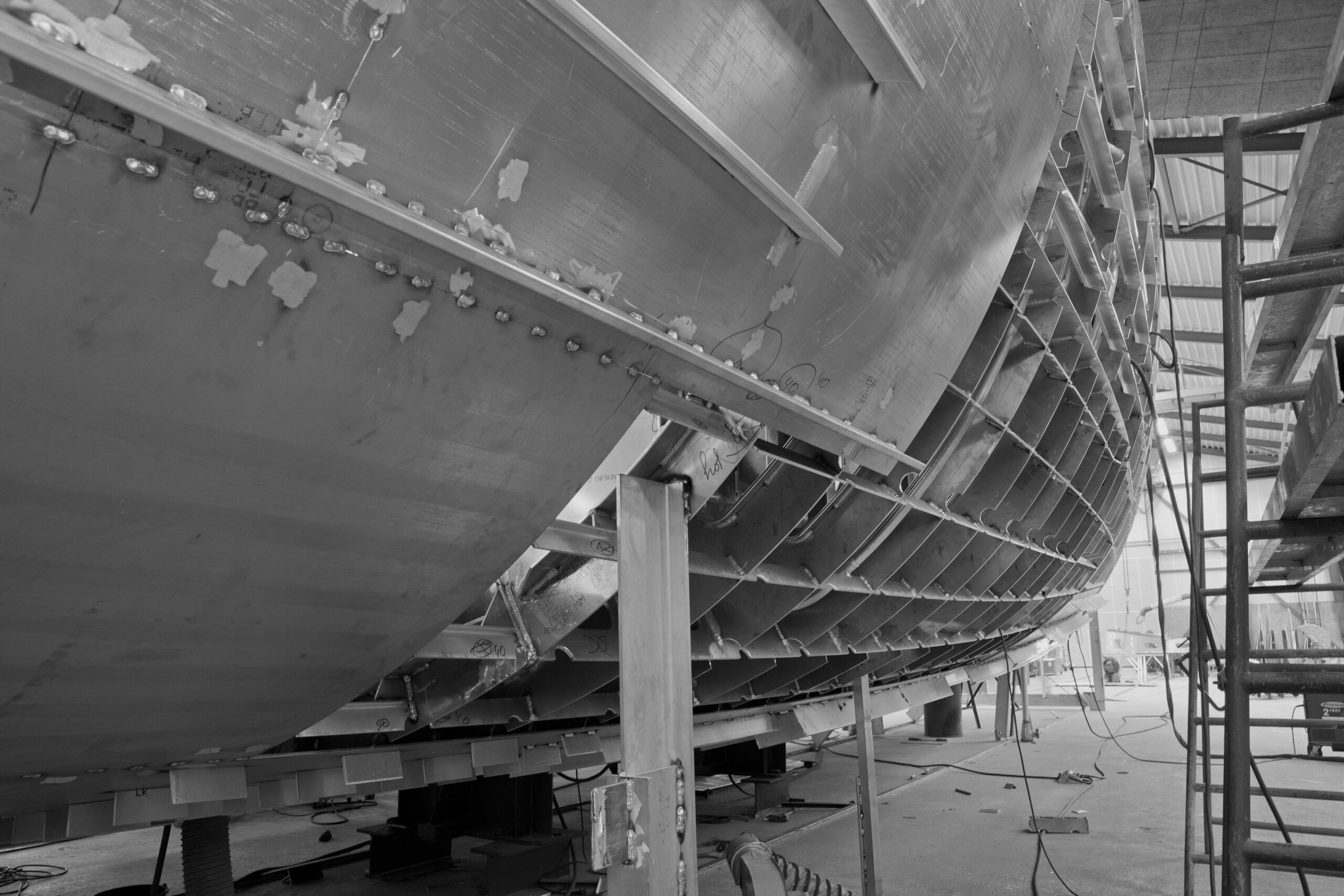
Spain now accounts for 20% of all refits by yachts over 30 metres globally, according to the Monaco Yacht Show’s 2025 market report. This figure puts it firmly in the top refit destinations worldwide, alongside the Netherlands and Italy, and trailing behind the US by just a single percent.
Within Spain, Palma de Mallorca is the epicentre.
Infrastructure alone doesn’t explain dominance, however. What makes Palma different is density: a concentration of skilled trades, specialist contractors, and institutional knowledge that has compounded over decades.
The 800+ companies that make up the Balearic nautical sector generate over €1.1 billion in annual turnover, and employ over 5,000 people, contributing 3.1% of Balearic GDP, according to the Balearic Marine Cluster.
As Tomi Salom, President of the Cluster, stated at the inaugural Balearic Superyacht Forum: “The nautical industry in the Balearic Islands is not only an integral part of our local economy, but also a symbol of our identity and culture.”
For owners and captains considering where to base a refit, that identity matters. It translates into something tangible on the hard: a workforce with generational knowledge, a city that bends around the industry, rather than the reverse, and a pipeline of specialist contractors deep enough to absorb even the most complex programmes.
The ‘open yard’ advantage: STP and Astilleros de Mallorca
At the centre of Palma’s refit infrastructure are the shipyards STP and Astilleros de Mallorca.
STP features one of the largest technical areas in the Mediterranean. What distinguishes it from comparable facilities in Barcelona or La Ciotat is its ‘open yard’ model: owners and captains are free to select whichever contractors they choose from the more than 600 companies registered to work within the facility, rather than being tied to a single yard’s internal workforce.
Over 1,200 yachts pass through STP each year.
This is a model that creates both opportunity and complexity. The freedom to bring in the best rigger, the right paint team, a specialist electronics contractor is genuinely valuable—but only if someone coordinates those moving parts.
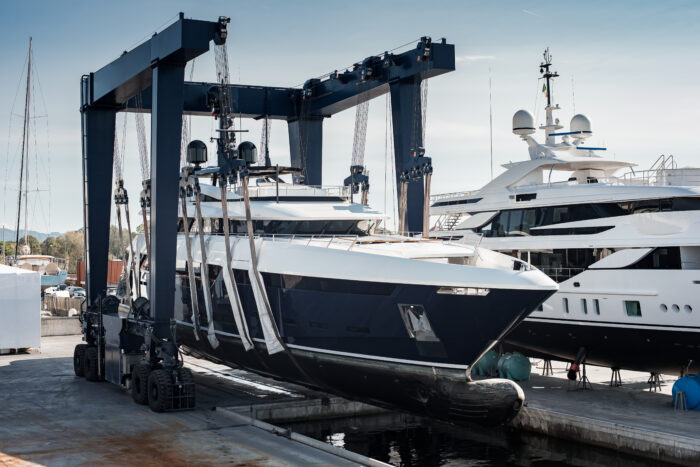
The yard’s recent €8 million expansion has changed the profile of the vessels it can accommodate. STP’s total footprint has grown from 130,000m2 to 162,000m2, with the addition of five new berths capable of welcoming yachts up to 110 metres LOA. The new docking area became operational at the end of 2024, with the remaining infrastructure completed in spring 2025.
Joan Rosselló, CEO of STP, was direct about the impetus: “Over the years, we’ve received numerous requests for berths of this size, and with this expansion, we’ll finally be able to meet this demand.”
The result is that the 100-metre-plus market—which previously looked elsewhere due to limited space—can now be managed in Palma with the same agility historically reserved for 50-70-metre vessels.
Astilleros de Mallorca, Palma’s other principal yard, complements STP’s open yard model with a full-service approach, offering haul-out capacity for vessels up to 120 metres and 1,000 tonnes. Together, the two facilities give Palma a depth of capacity that few Mediterranean ports can match.
The evolving landscape: infrastructure and 2026 trends
Palma’s refit season has traditionally run from October through May, driven by the charter and racing calendar.
What has shifted now is the scale and complexity of the projects arriving during that window, and the infrastructure required to service them.
The STP expansion responds directly to a trend that has been building across the market: the growing proportion of projects involving yachts above 70- metres. The Balearic Superyacht Forum flagged this clearly in its inaugural session, with industry leaders noting a specific lack of capacity for vessels over 70 metres as one of the sector’s primary constraints.
Beyond yards and berths, the refit’s season pull on crew is significant. Palma during the winter months is a functioning city, with established crew infrastructure: training courses, crew accommodation, well-connected flights, and a social environment that makes a five-month refit period manageable rather than a sentence to be endured. It is one of the reasons captains return, with crew experience very much a part of the project management equation.
Palma’s nautical sector average salary of €32,000 per year sits measurably above comparable roles in tourism and food, and the refurbishment and maintenance segments pays a further 10% of the sector average—a premium that attracts and retains skilled trades. For owners, that means people working on the hull have a reason to be precise.
Lead times for 2026-27 refits
The expansion has added capacity, but demand for Palma slots continues to grow. The yards are not the binding constraint—the talleres (specialist workshops) are.
Teams book out early. Securing availability is a function of local relationships and forward planning. Calling in January for a February start is not advisable.
Hill Robinson’s project management team operates year-round, which means those relationships are well maintained outside of refit season. For owners considering a 2026-2027 winter refit, our practical advice is straightforward: book as far ahead as you can.
Managing complexity: the Hill Robinson approach
The open yard model gives owners choices. What it doesn’t give them is coordination. That gap is precisely where Hill Robinson operates.
On a mid-season refit at STP, a project manager may be synchronising 20 or more subcontractors simultaneously: scheduling hull works around painting windows, sequencing engineering access, managing class surveyors, and ensuring the programme stays on track when one trade runs long.
That kind of orchestration requires someone who knows the yard, the contractors, and the owner’s priorities with equal depth.
Hill Robinson’s Palma team operates from our office on Avenida de Gabriel Roca, located directly adjacent to STP—a deliberate positioning that allows the team to move between the office and the hard without friction. The role is that of owner’s representative and technical bridge: present on the ground, accountable for the outcome, and independent of any single contractor’s interests.
That independence is crucial. An owner engaging Hill Robinson is guaranteeing objective oversight of the entire programme, with the local relationships needed to pull the right specialist at the right time.
Key facts at a glance
- Spain holds a 20% market share of all refit visits by yachts over 30 metres, placing it in the global top three
- The Balearic nautical sector generates over €1.1 billion in annual turnover across more than 850 companies
- The sector employs over 5,000 people and contributes 3.1% of Balearic GDP (Balearic Marine Cluster)
- STP’s €8 million expansion adds five berths for yachts up to 100 metres LOA, with new capacity operational from late 2024
- 76% of Balearic nautical companies are based in Mallorca, with 45% concentrated in Palma
- Refit and maintenance salaries average 10% above the sector mean of €32,000 per year
- Hill Robinson’s Palma office is located on Avenida de Gabriel Roca, directly adjacent to STP
Palma’s position as a leading Mediterranean refit hub isn’t an accident of geography, but the result of a concentration of skilled trades, the depth of its contractor ecosystem, and the kind of institutional knowledge that compounds over time. The yard provides the space. The skills to navigate it is something else entirely.
Planning a refit in Palma?
Hill Robinson’s project management team provides on-the-ground project management for refit programmes of all scales. Get in touch to discuss your 2026-27 shipyard period.
Keep reading
Related news
Editorial
19 May 2026
The superyacht industry is finally taking crew welfare seriously. Here’s what that means in practice.
For five years, Kayleigh Liddell has been making the same argument: that superyacht management companies need to think about crew the way good employers…
Read more
Editorial
30 March 2026
Is the US flag right for your superyacht in 2026?
Your flag state determines which crews you can hire, where you can charter, your ownership structure, and what tax obligations follow the vessel into…
Read more
Editorial
18 March 2026
The crew guide to Palm Beach International Boat Show 2026
If you’re berthed at Palm Harbor Marina, you’re already at the centre of the Palm Beach International Boat Show (PBIBS). The Superyacht Show runs…
Read more